The Three Monks


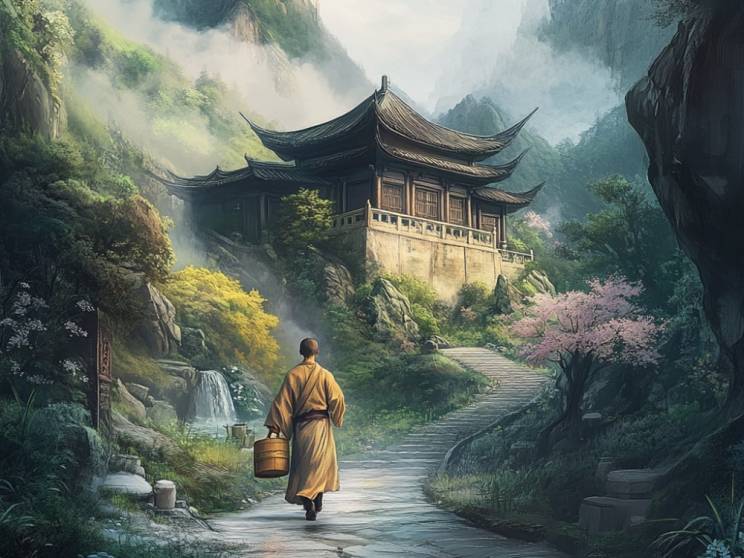
A long, long time ago, nestled deep in the mountains, there was a small temple. Living in the temple was a young monk. Every morning, the first thing the young monk did was fetch water. He carried a wooden bucket, walking along the winding mountain path down to the stream. After filling the bucket, he carefully made his way back up to the temple, ensuring not a drop was spilled.
At the temple, he poured the water into a large jar, filled the vase on the altar of the Goddess of Mercy, lit incense, and began his daily routine of chanting scriptures and striking the wooden fish drum.
The young monk’s life, though busy, was peaceful. Thanks to his efforts, the temple’s plants thrived, and their fragrant blossoms filled the air. At night, he guarded the temple from thieving mice. Day after day, his life was calm and fulfilling.
One day, a big monk arrived at the temple. The big monk was tall and strong. Feeling thirsty as soon as he entered, he helped himself to half the water in the jar without a word. The young monk, though surprised, politely said, “Brother, the water is running low. We need to fetch more.”
The big monk nodded but thought to himself, “Why should I fetch water alone when it’s easier to share the load?” He suggested, “Why don’t we fetch water together? That seems fair.” The young monk agreed, and together they carried a pole with a bucket hanging in the middle, each holding one end.
For a while, this worked, and though water was scarce, it was just enough for the temple.
Not long after, a third monk arrived. He was plump and cheerful but immediately complained about being thirsty. Finding the water jar empty, he asked, “Why is there no water?” The young monk and the big monk exchanged glances and replied, “We just finished the last of it. You’ll have to fetch some yourself.”
The plump monk frowned, reluctant to exert himself, but thirst eventually drove him to fetch water from the stream. It took him great effort, but he managed to return with a full bucket—only to drink it all in one go, leaving nothing behind.
From that day on, none of the monks wanted to fetch water. The young monk felt he had done enough already. The big monk thought it was unfair for him to work harder just because he was strong. And the plump monk found the task too exhausting. As a result, the water jar remained empty, the vase on the altar dried out, and the once-vibrant plants withered.
At night, the temple became a playground for mice. With no one guarding, they feasted on offerings and chewed through scriptures. The monks stayed in their rooms, ignoring the chaos.
The situation worsened until one fateful night. A mouse knocked over a candle, and the flames quickly spread, setting the temple ablaze.
Seeing the fire, the three monks panicked and rushed out. The young monk grabbed a bucket, the big monk and the plump monk joined in, and together they fetched water to extinguish the flames. After much effort, they managed to put out the fire, but the temple was left in ruins.
Staring at the destruction, the monks fell silent. The young monk finally spoke, “If we had worked together to fetch water, there wouldn’t have been a fire. The mice wouldn’t have dared come, and the temple wouldn’t have been destroyed.” The big monk and the plump monk hung their heads in shame.
From that day on, the three monks decided to work as a team. They fetched water together, dividing the task evenly. The water jar was always full, the altar vase never empty, and the plants flourished once more. At night, they took turns guarding the temple, and the mice never returned.
The temple regained its peace and harmony, and the monks learned an important lesson: only through teamwork can life be truly fulfilling.





 Sign in with Google